Adventure Travel 365

🎉 Sign up to win a one-year Free Subscription to Explore Luxury Digital Magazine 🎁

The Ultimate Luxury Adventure Travel Magazine

Hike All Day, Check In Somewhere Fabulous: America’s Best Fall Trails

Best Fall Hikes in the USA, With Luxury Stays Worth the Trip

Fall hiking has a very convincing sales pitch. Cooler temperatures make long days on the trail more comfortable, forests start changing color, and mountain landscapes that looked impressive in summer suddenly get a lot more dramatic. Even better, the season does not arrive everywhere at once, so the window for a great autumn hiking trip can stretch from September well into November depending on where you go. The National Park Service notes that fall color across the country can appear from September through December, depending on climate and conditions.

But we are not interested in simply rounding up the best fall hikes in USA and sending you off with a water bottle and good intentions.

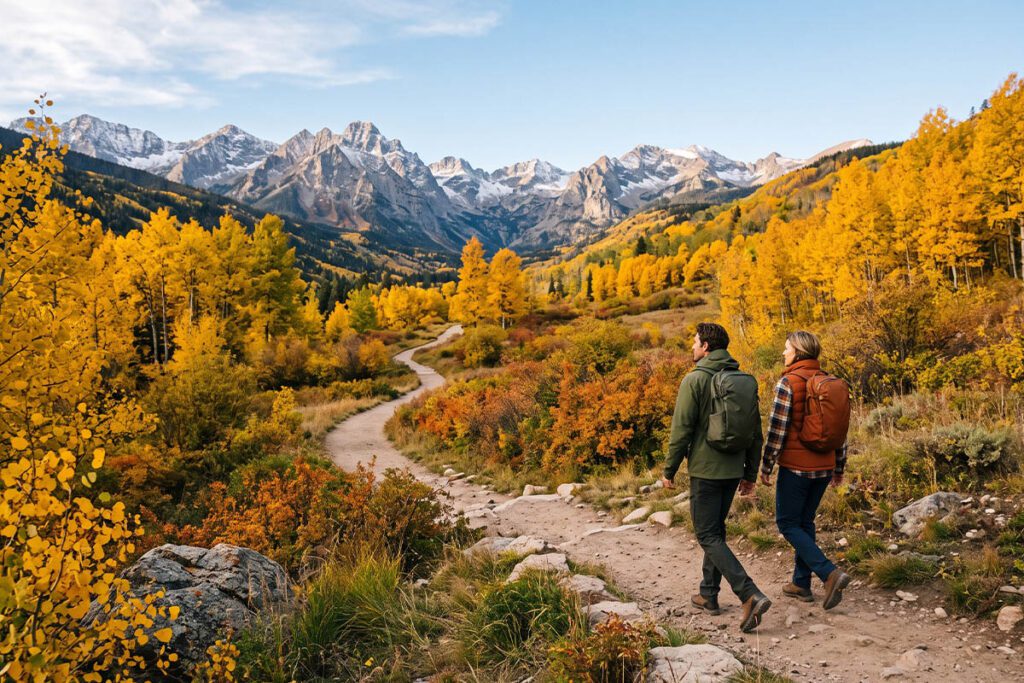
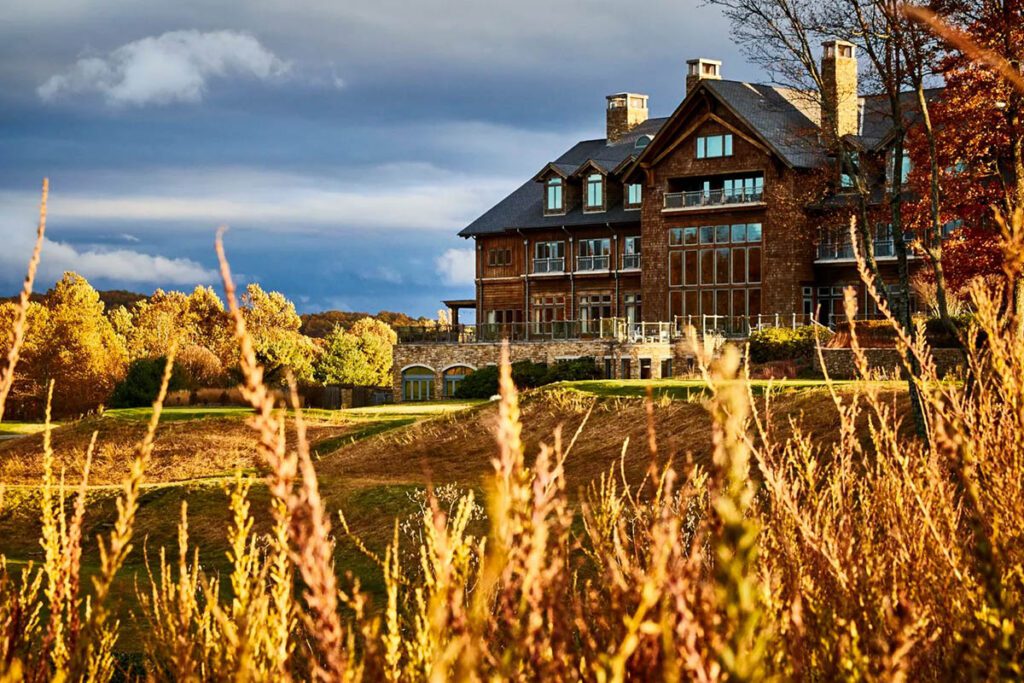
The better version of a fall hiking trip ends somewhere worth coming back to. Think golden aspens followed by dinner in Aspen, a morning beneath the Tetons followed by a proper hotel evening, or a rock scramble in the Hudson Valley that finishes at a Victorian mountain resort instead of a parking lot.

From Colorado and Wyoming to New England and the Blue Ridge Mountains, these six fall hiking escapes pair trails worth traveling for with stays that make the rest of the trip just as compelling.

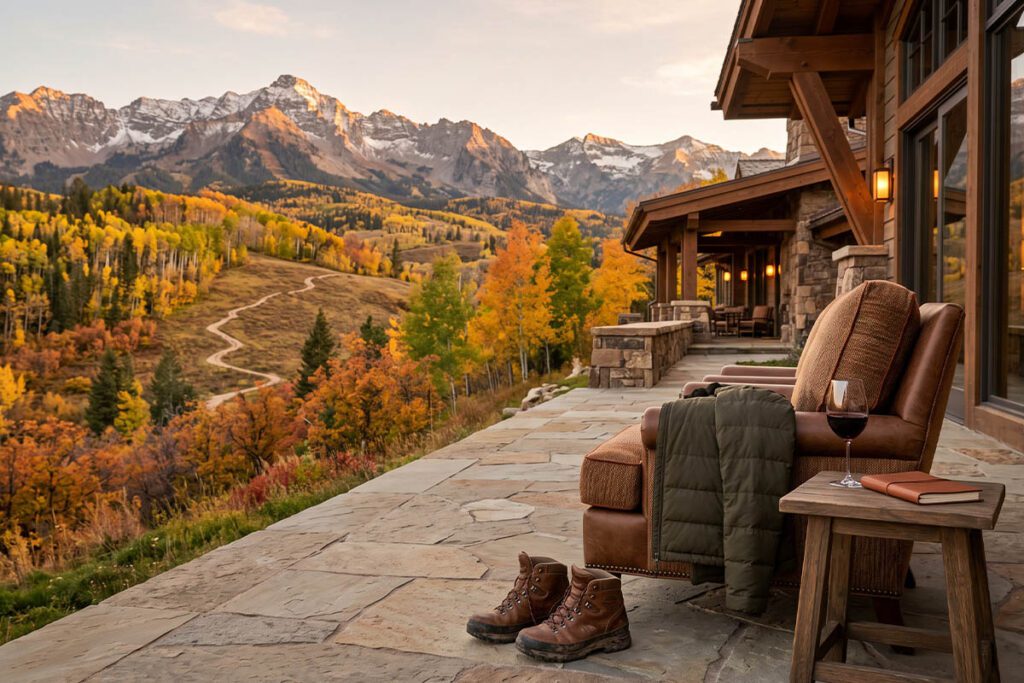
Because hiking is considerably easier to romanticize when there is a good bed waiting at the end.

best fall hikes in USA

Why Fall Is One of the Best Seasons for Hiking in the USA

The obvious answer is the foliage. The better answer is that fall changes the entire hiking experience.

In the West, aspens can turn mountain valleys bright yellow against darker evergreens and rocky peaks. Grand Teton National Park, for example, sees aspens shift to vibrant yellow in fall, while willows take on shades of yellow and orange across lower, wetter areas of the park. In the East, hardwood forests bring a broader mix of reds, oranges, and golds to places like New England, the Hudson Valley, and the southern Appalachians.

Then there is the weather. Lower temperatures can make hiking far more comfortable than during the heat of summer, particularly on exposed or longer trails. Grand Teton specifically highlights fall as an excellent hiking season for its cooler conditions and changing colors, although it also warns that mountain weather becomes less predictable and high-elevation trails can be affected by early snow.

Wildlife adds another dimension in some destinations. Fall in Grand Teton brings migration and increased seasonal activity among elk, moose, bison, pronghorn, and bears, although seeing more wildlife also means giving animals plenty of space and knowing the rules before hitting the trail.

And perhaps most importantly, autumn does not peak everywhere on the same weekend. Elevation, latitude, weather, and local conditions all affect when leaves change.

That works in a traveler’s favor. Start with golden aspens in the Rockies, follow the color east into New England, then head south as autumn reaches the Smokies and Blue Ridge.

Just remember that “fall” does not automatically mean “quiet.” Famous foliage destinations can become very popular when the colors peak. Check current conditions, trail access, weather, and reservation requirements before you go.

Then choose the hike that earns the view and the hotel that makes the rest of the trip worthwhile.

Best Fall Hikes in the USA With Luxury Stays

Featured hike: Maroon Lake Scenic Trail / Crater Lake Trail
Stay: Hotel Jerome, Auberge Collection

Colorado does fall beautifully, but Maroon Bells is not interested in subtle.

The twin peaks rise above Maroon Lake just outside Aspen, framed by groves of aspen that can turn the valley brilliant gold in fall. For travelers who want the view without committing to an all-day hike, the Maroon Lake Scenic Trail is the easy entry point. Aspen Chamber lists it at 1.3 miles one way, following the lake and creek through one of the area’s most photographed landscapes.

If you want to earn the scenery a little more, continue toward Crater Lake. The moderate trail begins at Maroon Lake and runs about 1.75 miles one way, climbing through aspen forest and rockier terrain before reaching the lake beneath the surrounding peaks. It is a noticeable step up from the lakeside stroll, but still approachable enough for travelers who want a proper hike without turning the day into an endurance event.

The practical catch is access. Maroon Bells is popular enough that transportation requires planning, with reservations currently required for either shuttle service or trailhead parking during the operating season.

That is where Hotel Jerome becomes more than simply the place you booked in Aspen. Auberge currently offers an Aspen itinerary built around a private guided hike to Maroon Bells and Crater Lake, complete with a gourmet picnic prepared by the hotel.

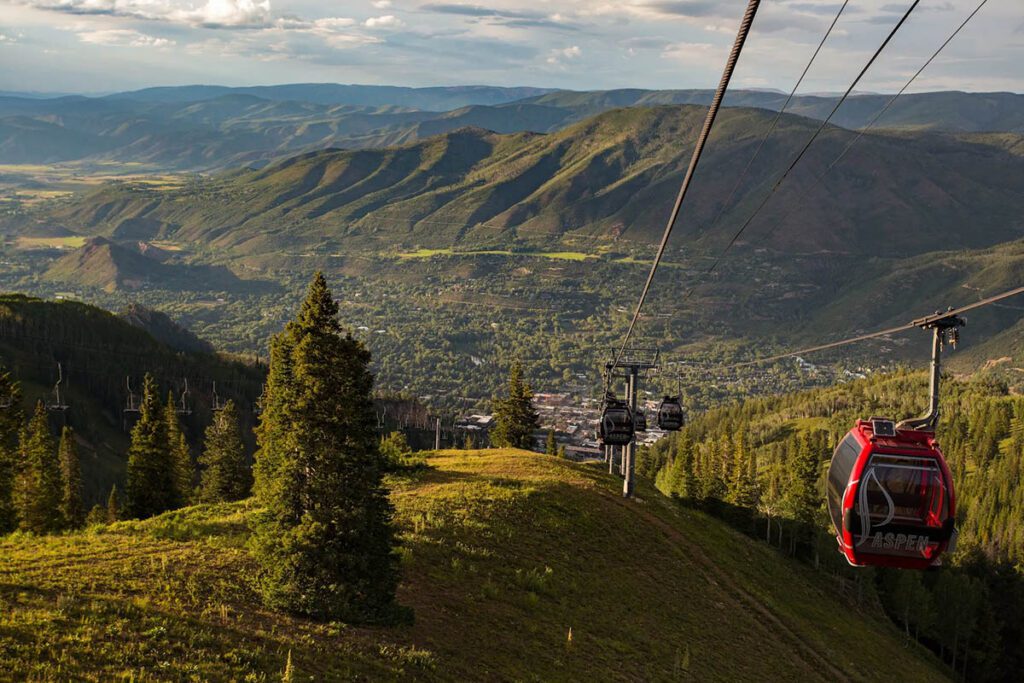
Back in town, you are trading hiking boots for one of Aspen’s most storied hotels, right in the middle of the action. The contrast is part of the appeal. The morning is alpine lakes, aspens, and rocky trails. The evening can involve a proper dinner and absolutely no freeze-dried food.

Why stay here: This trip is for travelers who want the classic Colorado fall image and a base that makes logistics considerably easier. Maroon Bells delivers the postcard. Hotel Jerome makes the rest of the weekend feel just as polished.

Featured hike: Jenny Lake / Cascade Canyon
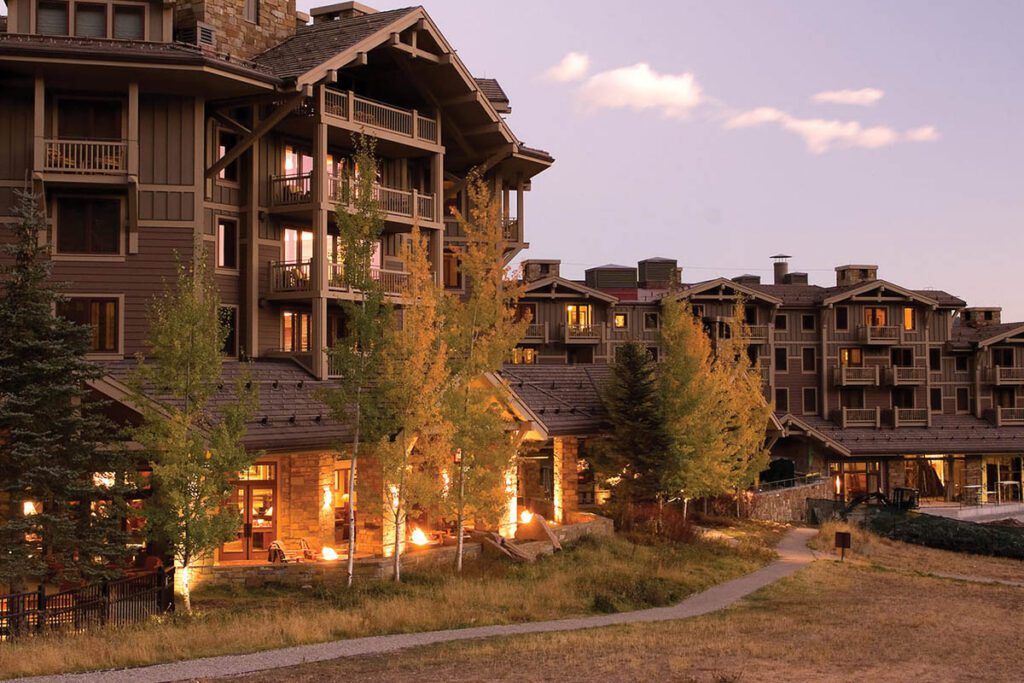
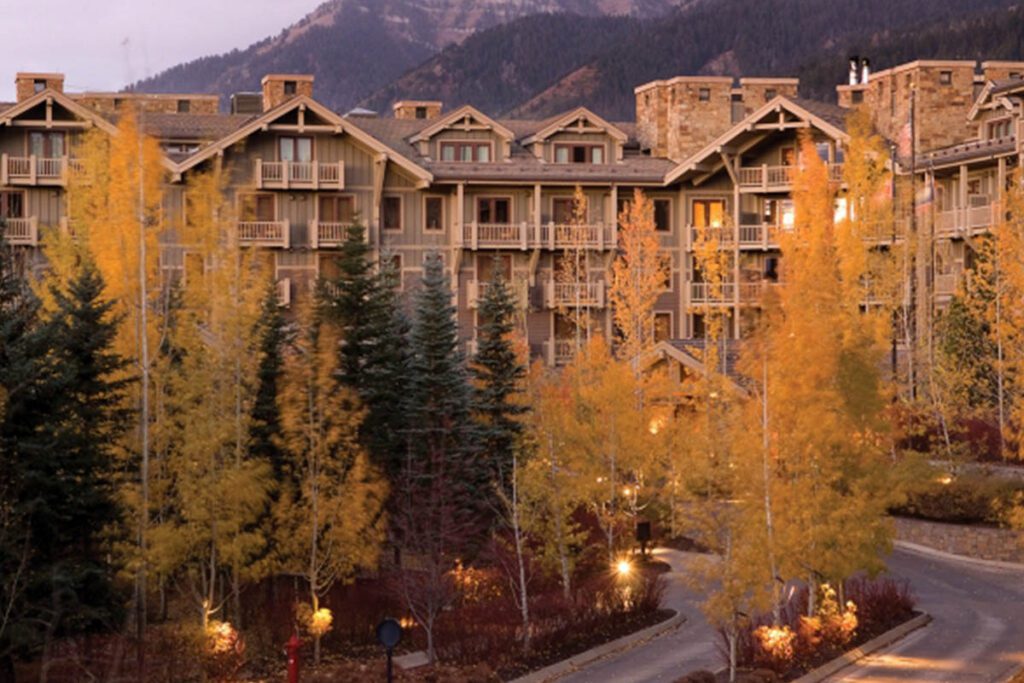
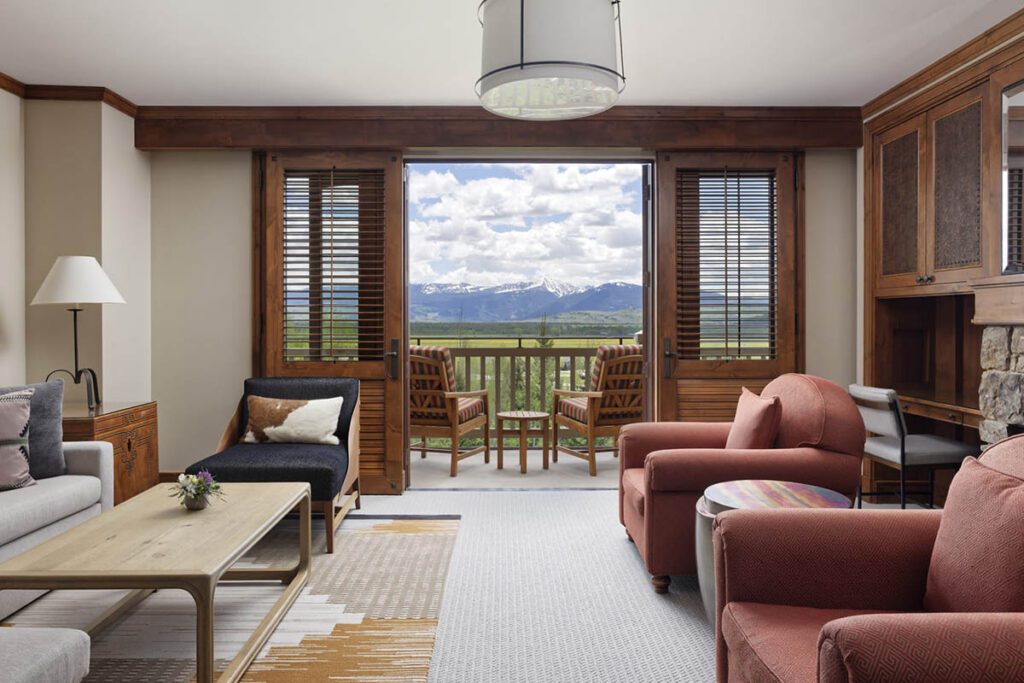
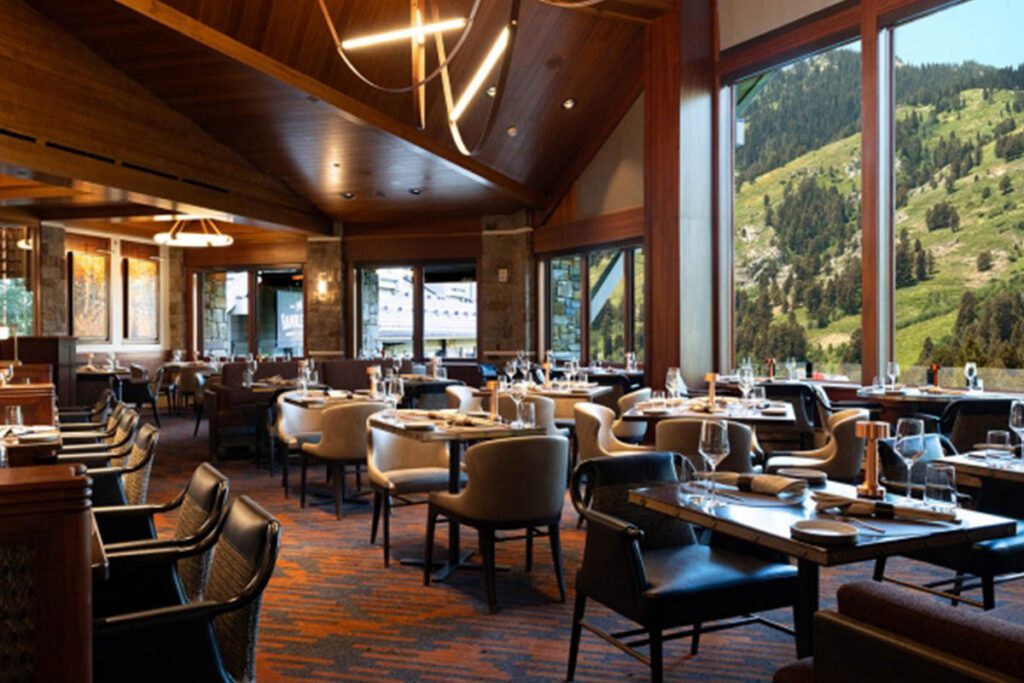
Stay: Four Seasons Resort and Residences Jackson Hole

Grand Teton is less about a single burst of foliage and more about scale.

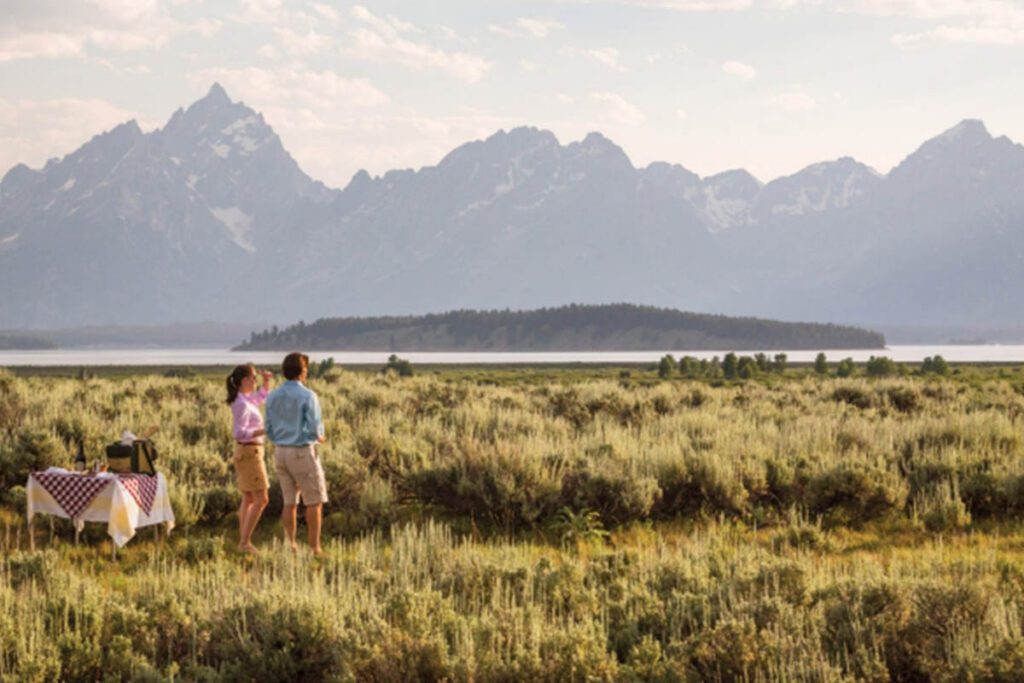
Around Jenny Lake, autumn brings yellow aspens and cottonwoods beneath the jagged Teton Range, with the chance to spot moose, bears, elk, or other wildlife that adds another layer to the day. The scenery feels bigger and wilder than Aspen, and the hiking can be too.

Jenny Lake gives you plenty of flexibility. The full loop is 7.1 miles round trip and rated moderate by the National Park Service, with views of the lake, Cascade Canyon, and the Cathedral Group along the way. If you want something shorter, you can reach Hidden Falls and Inspiration Point by trail or shorten the hike with the seasonal Jenny Lake boat shuttle.

For a more serious hiking day, continue into Cascade Canyon. The route to the Forks of Cascade Canyon is 13.3 miles round trip from South Jenny Lake, or about 9.4 miles using the shuttle boat, with 1,480 feet of elevation gain on the shorter version. NPS classifies it as moderately strenuous, and the payoff is the chance to hike deep into the Teton Range with Grand Teton, Mount Owen, and Teewinot rising around the canyon.

Fall also adds a practical edge. Mountain conditions can change quickly, early snow is possible at higher elevations, and bears remain active in the park. Carry bear spray, understand wildlife-distance rules, and check current trail conditions before setting out.

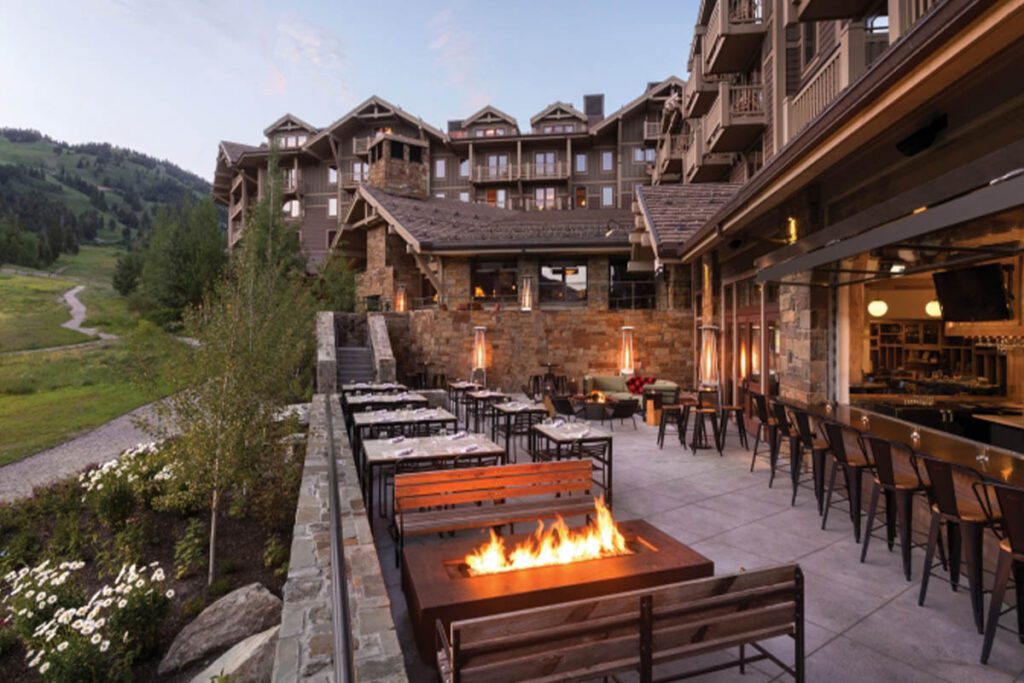
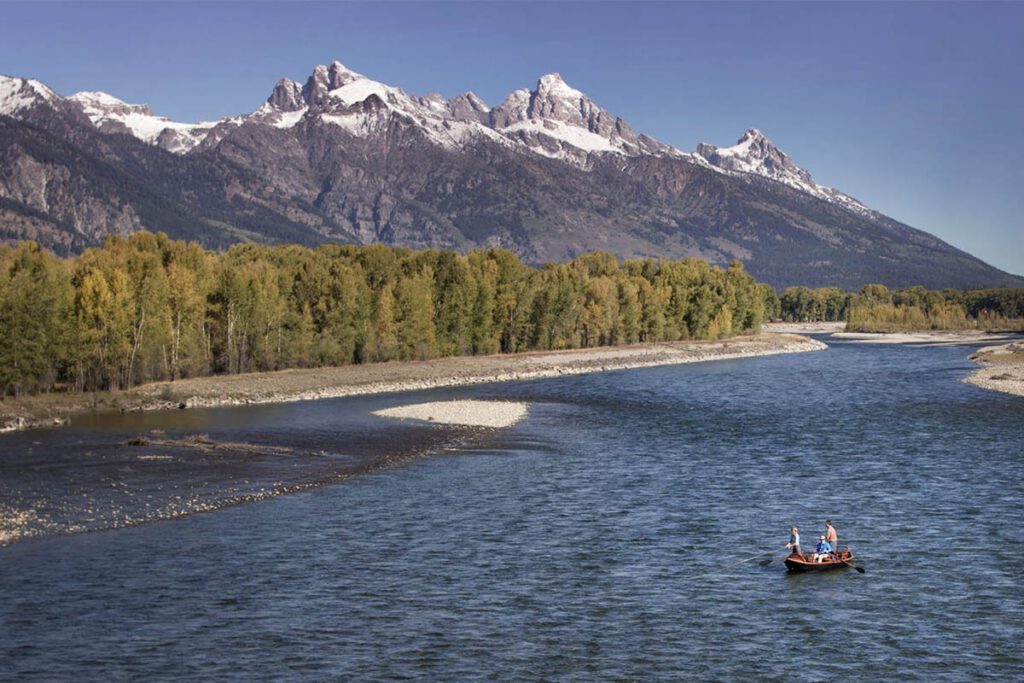
Four Seasons Resort and Residences Jackson Hole fits because its fall programming focuses on getting outside rather than simply admiring the Tetons from a window. Current seasonal itineraries include wildlife safaris, scenic river floats, stargazing, and other outdoor experiences, giving the trip plenty of range beyond one trail.

Why stay here: Choose this one if you want your fall hiking trip to feel bigger, wilder, and a little less predictable. Jenny Lake gives you options. Cascade Canyon gives you the real mountain day. Jackson Hole handles the rest.

Featured hike: Mount Willard
Stay: Omni Mount Washington Resort & Spa

Mount Willard is proof that a great fall hike does not need to consume the entire day.

The trail climbs steadily from Crawford Notch to an open viewpoint overlooking the valley, delivering one of the White Mountains’ best effort-to-view ratios. The Appalachian Mountain Club lists the route at roughly 3.2 miles round trip with about 900 feet of elevation gain, calling it a moderate hike with a well-graded trail and a broad panorama over Crawford Notch at the top.

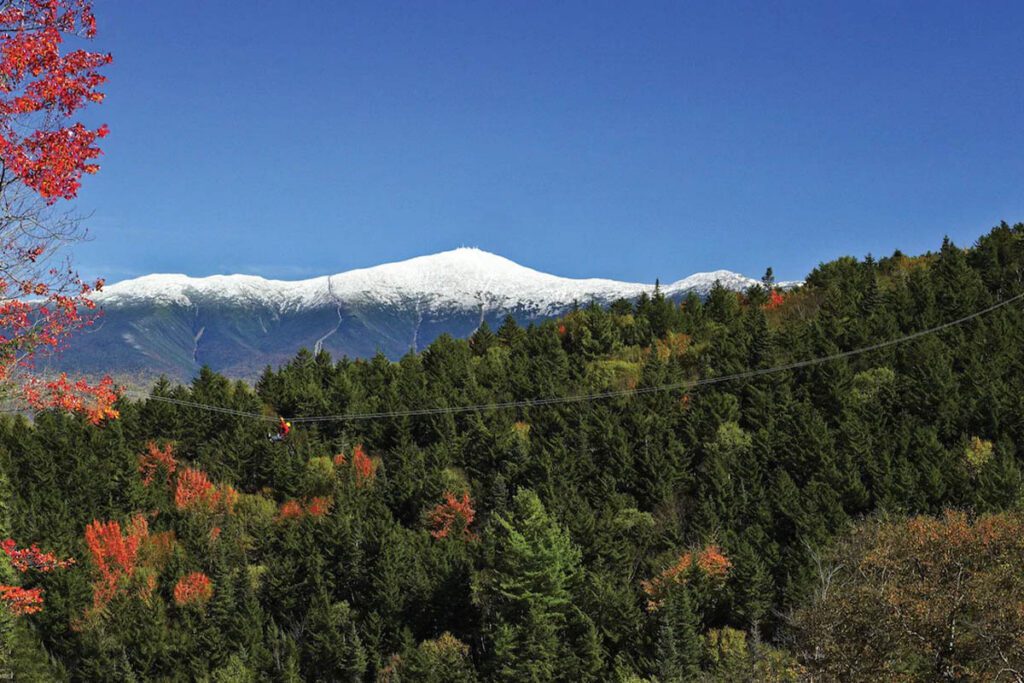
That payoff gets considerably better once New Hampshire moves into fall. From the summit ledges, the view drops straight into Crawford Notch, where hardwood forests can turn the valley into layers of red, orange, and gold beneath the surrounding peaks.

The hike is popular, and for good reason. You get the satisfying climb, the big New England reveal, and still have plenty of day left afterward.

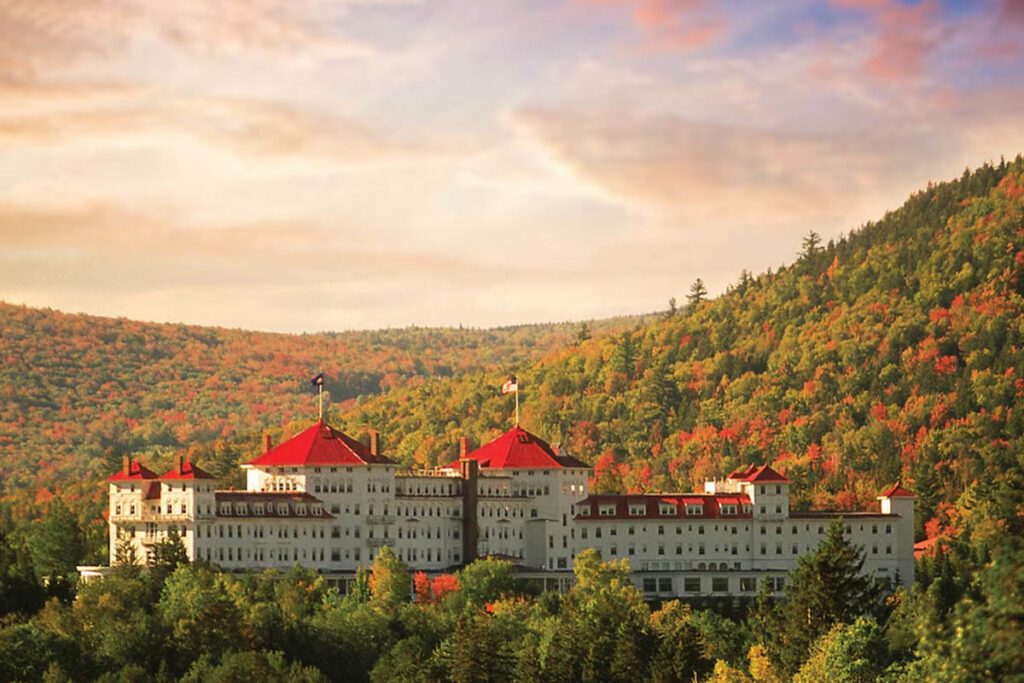
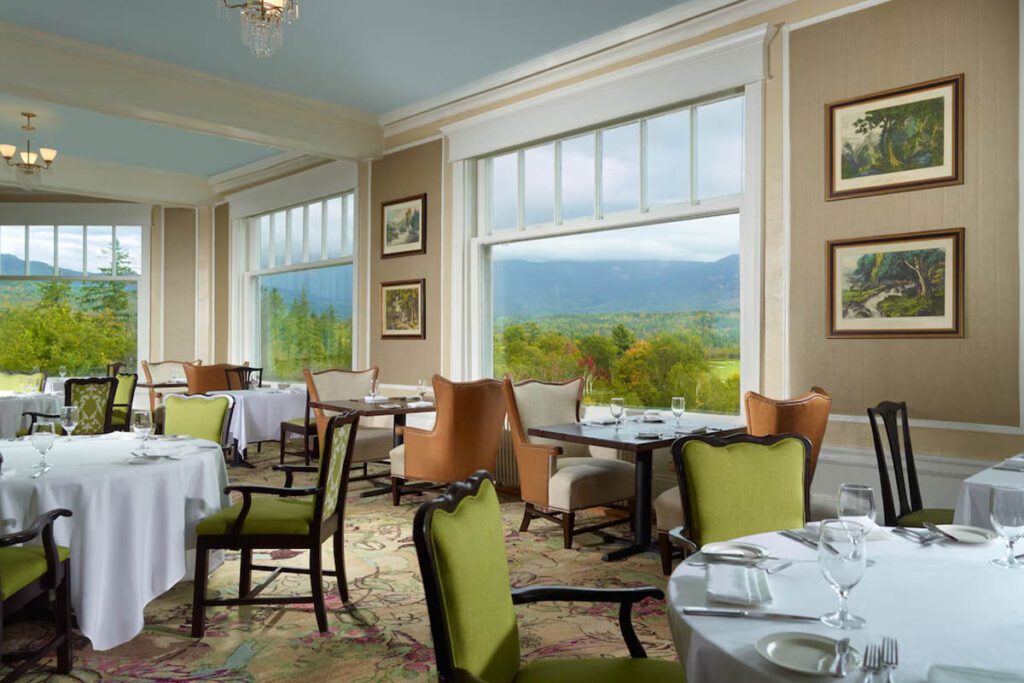
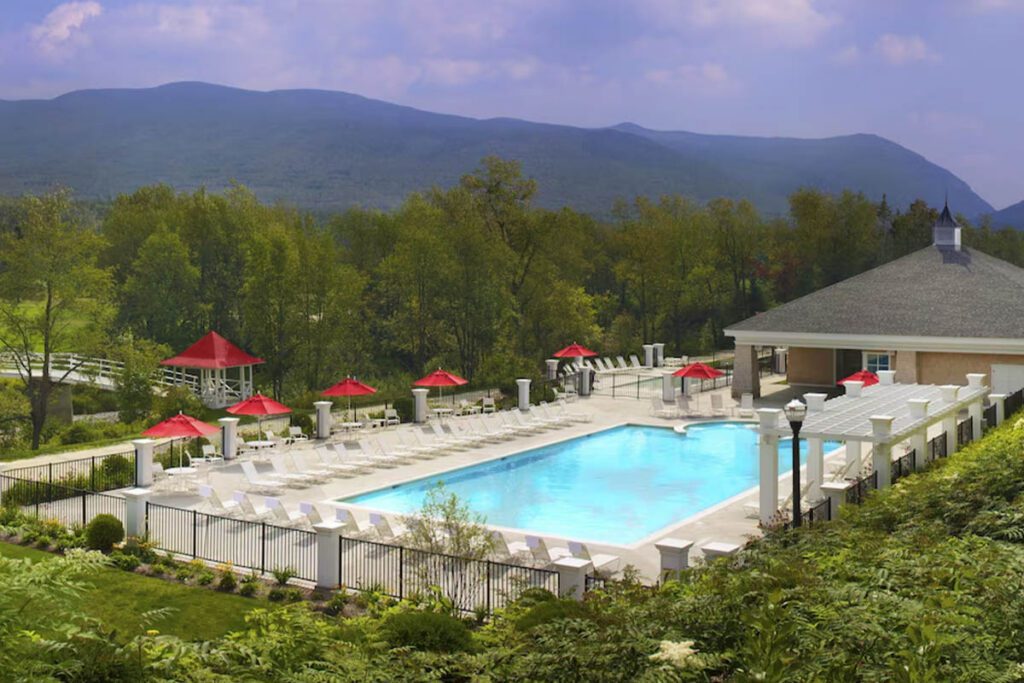
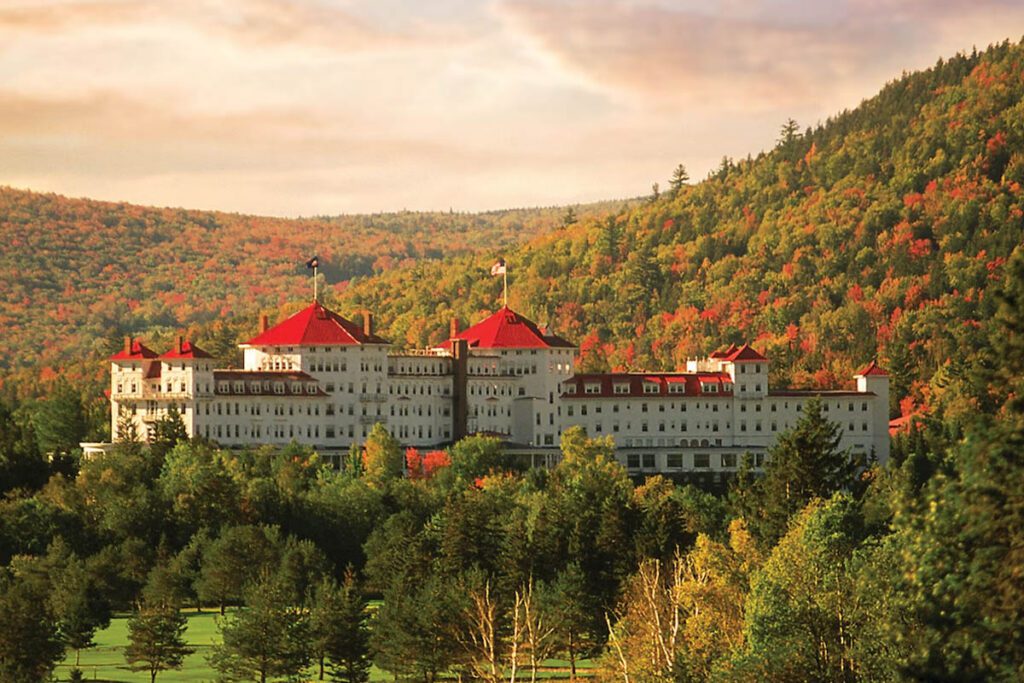
Omni Mount Washington Resort & Spa is a natural base because it sits in the White Mountains with easy access to Mount Willard, Crawford Path, and a much broader hiking network. The property also offers its own seasonal outdoor activities, so the trip can stay active without requiring every day to revolve around a major trail.

Then there is the setting itself. Coming back to one of New England’s grand historic mountain hotels after a few hours in Crawford Notch gives this pairing a sense of occasion without making the hike feel secondary.

Why stay here: Mount Willard is ideal for travelers who want classic New England scenery without committing to a serious mountain mission. The hike does the scenic heavy lifting. The hotel lets you keep the rest of the day.

Featured hike: Labyrinth + Lemon Squeeze to Sky Top
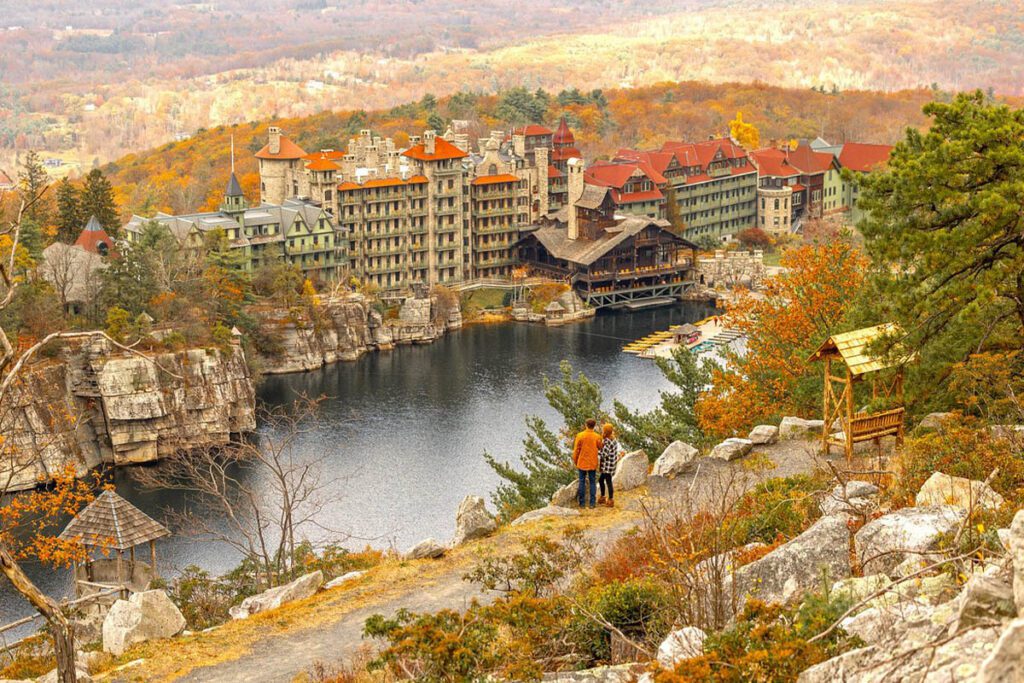
Stay: Mohonk Mountain House

Mohonk’s Labyrinth and Lemon Squeeze is not the trail to choose if your idea of hiking is a peaceful walk through leaves.

This one asks you to participate.

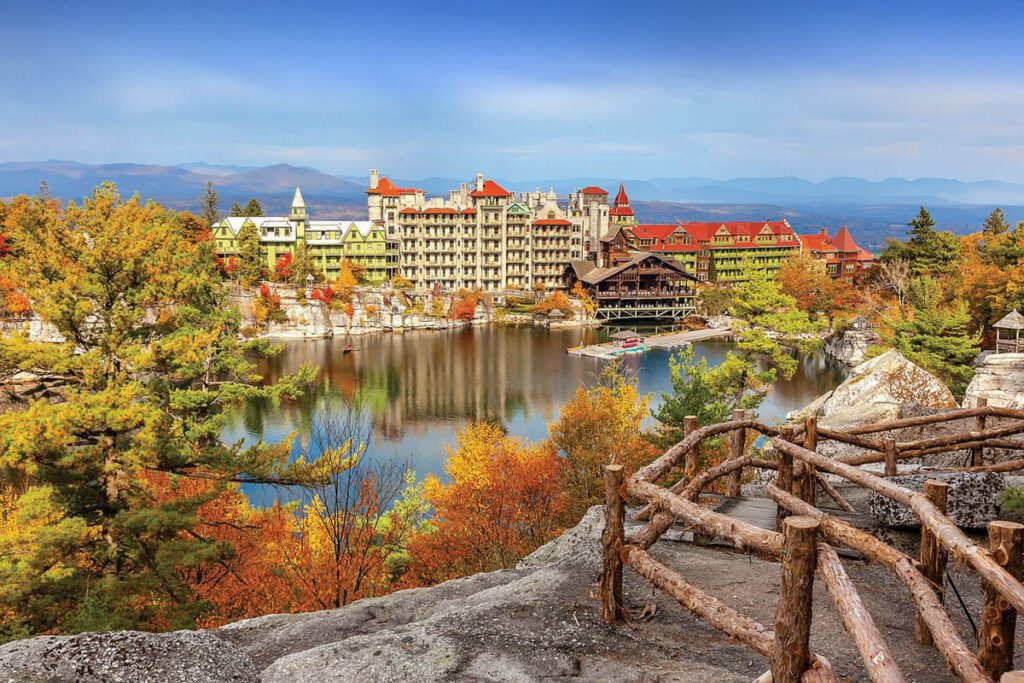
The strenuous rock scramble begins near Mohonk Lake and works its way through boulders, narrow crevices, and tight rock formations that require agility, balance, and a willingness to occasionally use your hands. Mohonk currently lists the route at about 1 to 1.1 miles and describes it as strenuous, with narrow passages that demand nimbleness.

The famous Lemon Squeeze section is exactly what the name suggests: a tight passage through rock before the route continues toward the Sky Top area.

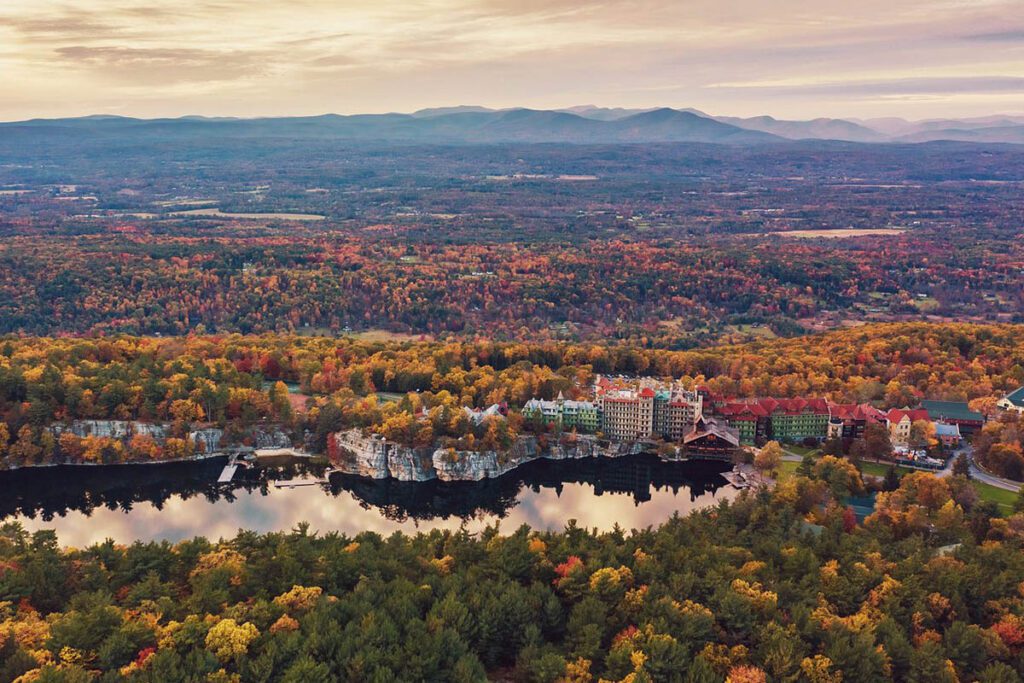
The reward is a completely different kind of autumn outing. Instead of arriving at an overlook after a steady uphill walk, you scramble your way through the Shawangunk landscape before emerging above the Hudson Valley.

It is also important to know what you are signing up for. This is not one of Mohonk’s easy carriage-road walks. Access depends on weather and trail conditions, and the resort recommends checking current conditions before heading out. If scrambling or tight spaces are not your thing, Mohonk has more than 85 miles of private trails and carriage roads ranging from beginner to advanced.

The best part is that overnight guests do not need to drive anywhere to start exploring. The trail system begins on the property, so the hiking feels less like an excursion and more like part of the place itself.

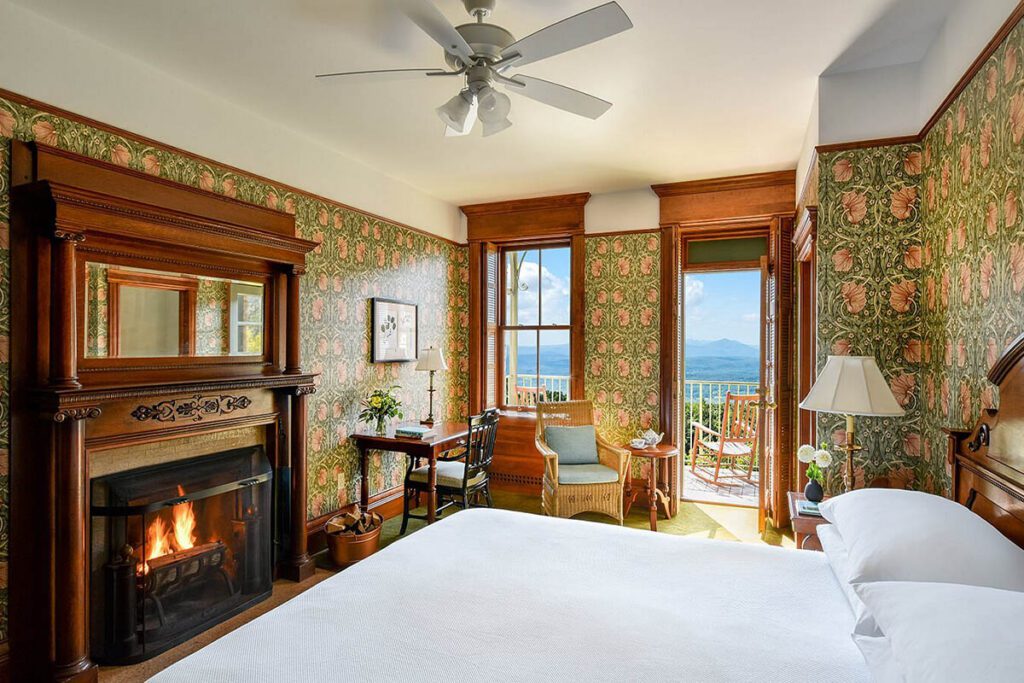
Why stay here: Choose Mohonk if you want your fall hike to have personality. The Labyrinth is physical, playful, and memorable, while the rest of the property gives you plenty of gentler ways to keep exploring once you have had enough squeezing between rocks.

Featured experience: Blackberry Mountain’s private trail network
Stay: Blackberry Mountain

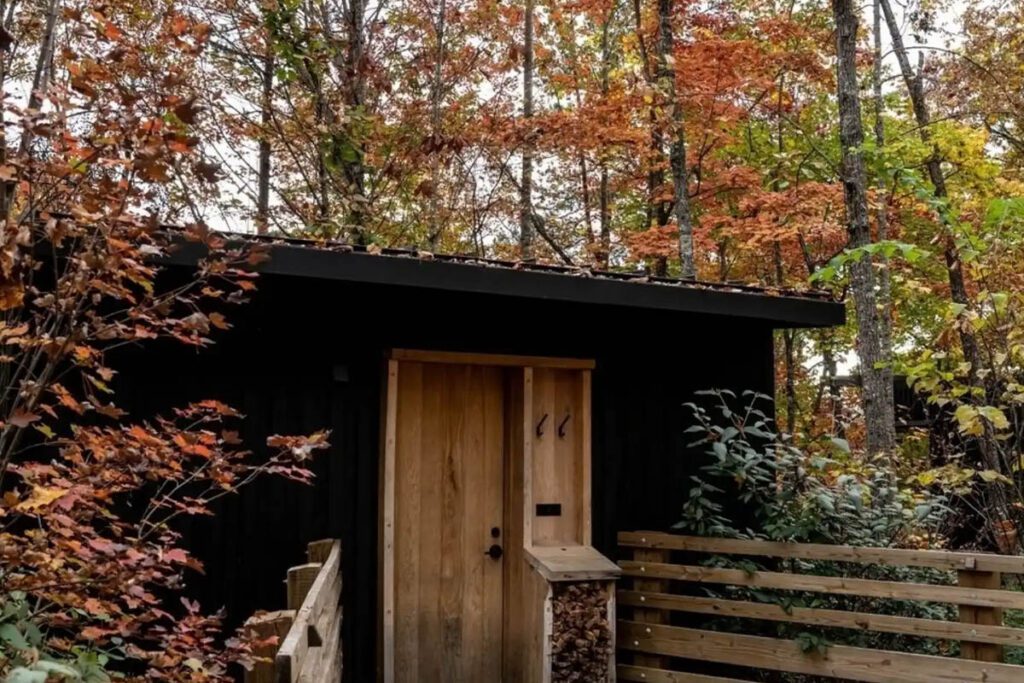
Blackberry Mountain changes the formula completely.

There is no famous trailhead to drive to, no park shuttle to catch, and no need to build the day around getting somewhere else first.

The hiking is already part of the resort.

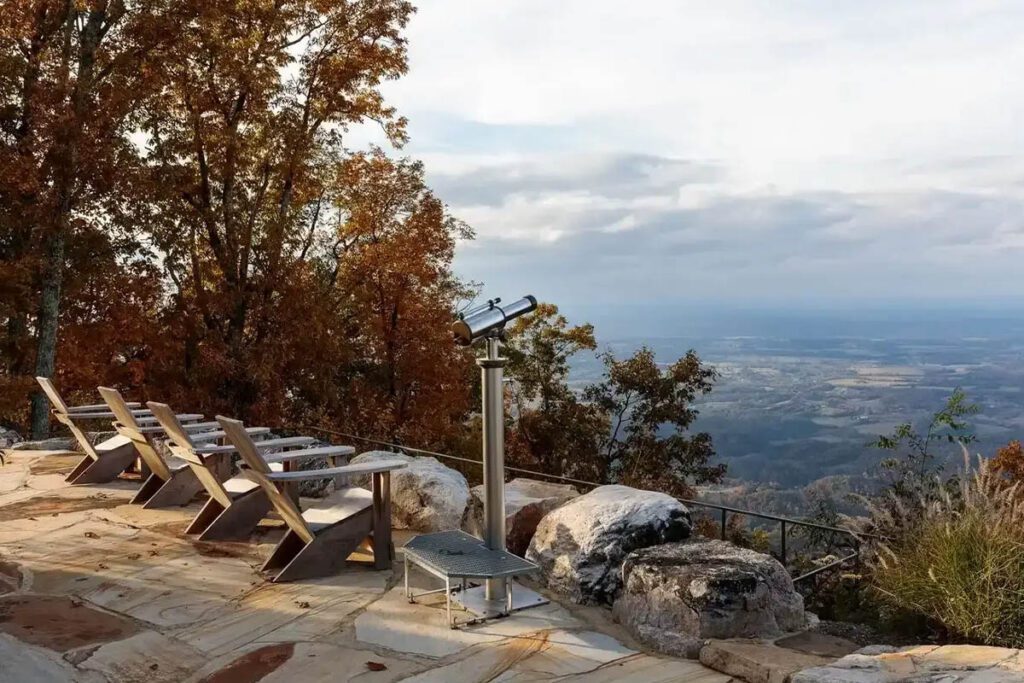
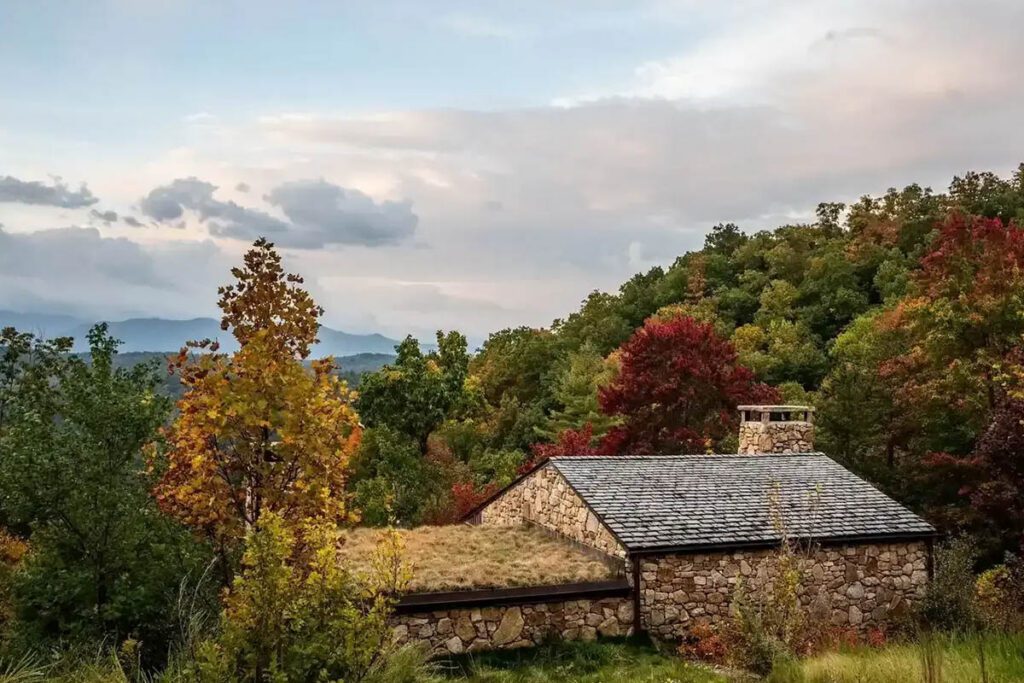
Spread across 5,200 private acres in East Tennessee, Blackberry Mountain has more than 30 miles of hiking and multi-use trails, including more than 15 miles dedicated specifically to hiking. Routes move from rocky ridge tops to cooler creek bottoms and hollows, with choices ranging from gentler nature walks to more demanding climbs.

Guided hikes are also available for guests who want more context on the plants, wildlife, and landscape around them.

Autumn gives those trails extra character, but the real appeal here is not chasing one famous overlook. It is having the freedom to walk out into the property, choose a route based on how ambitious you feel that morning, and let the rest of the day evolve from there.

That freedom extends beyond hiking. Blackberry’s outdoor and wellness programming makes it easy to mix trail time with art, food, cycling, or simply doing considerably less than you planned.

Why stay here: Blackberry Mountain is the strongest choice for travelers who want hiking built into the entire vacation rather than treated as a day trip. Wake up on the mountain, pick a trail, and see where the day goes.

Featured experience: Primland trail network
Stay: Primland, Auberge Collection

Primland takes the private-estate concept and supersizes it.

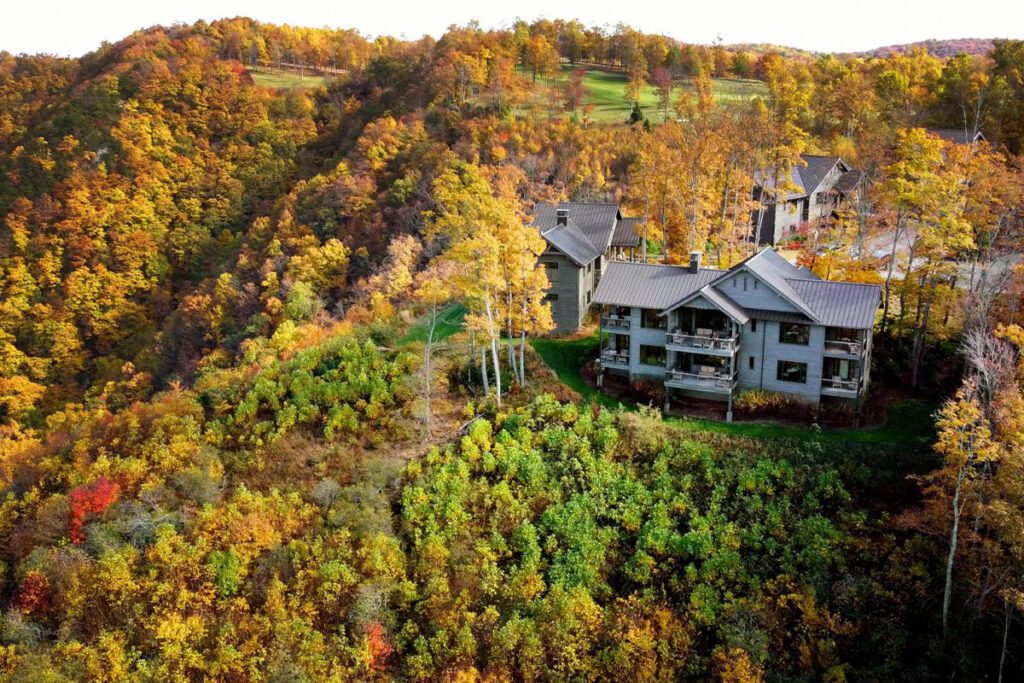
The Auberge resort occupies 12,000 private acres in Virginia’s Blue Ridge Mountains, which means hiking is only one way to explore an enormous landscape of forest, ridgelines, wildlife habitat, and broad mountain scenery.

Rather than centering the trip on a single headline trail, Primland works best as a place where you spend several days moving through the outdoors in different ways.

Hiking still deserves top billing. Guests can join complimentary guided outings with the resort’s naturalist to learn about local flora and wildlife, while other itineraries include nature hikes along the property’s Old Appalachian Trail.

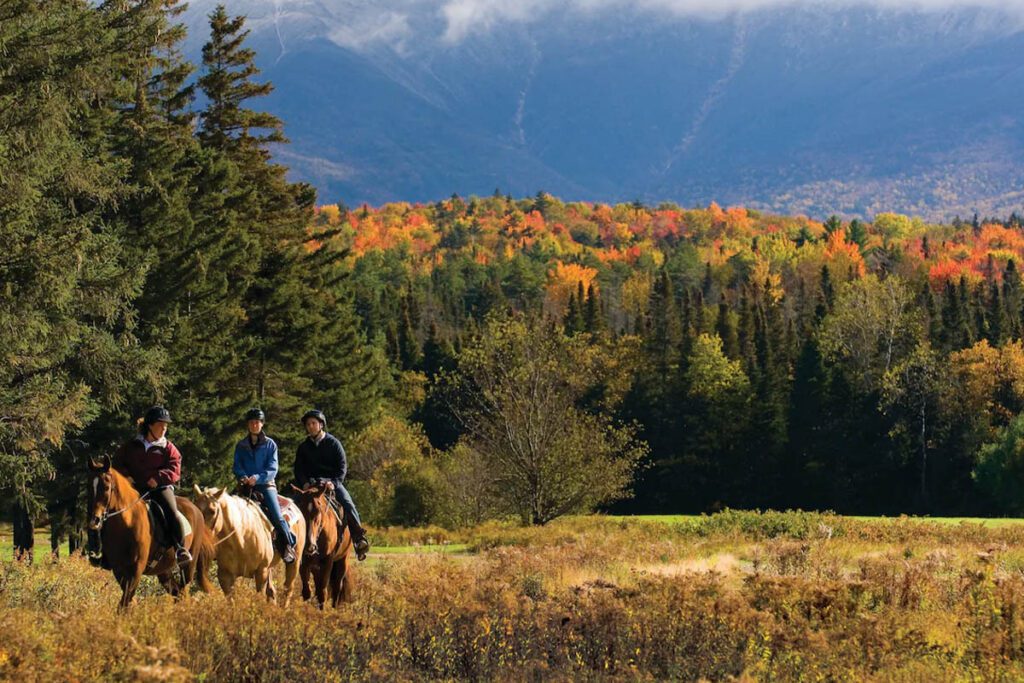
But a morning on foot can just as easily become an afternoon on horseback or an RTV excursion through the estate, followed by an evening looking for Saturn and the Milky Way through Primland’s observatory.

That breadth is what separates Primland from the other stops on this list. You are not traveling here for one famous trail. You are traveling here because 12,000 acres gives you enough room to build an entire outdoor weekend without repeating yourself.

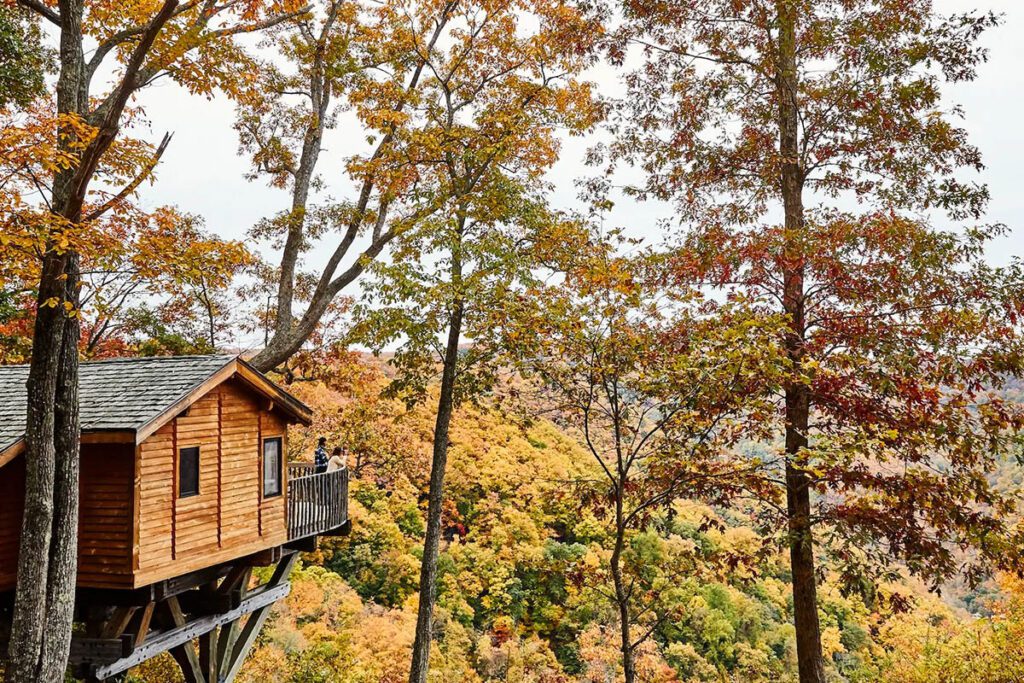
The accommodations add another layer, particularly the Mountain Top Tree House Suites built into the landscape above the Dan River Gorge.

Why stay here: Primland is for travelers who want the biggest canvas. Hike in the morning, try something completely different in the afternoon, look up at the stars after dark, and repeat.

How to Plan a Fall Hiking Trip

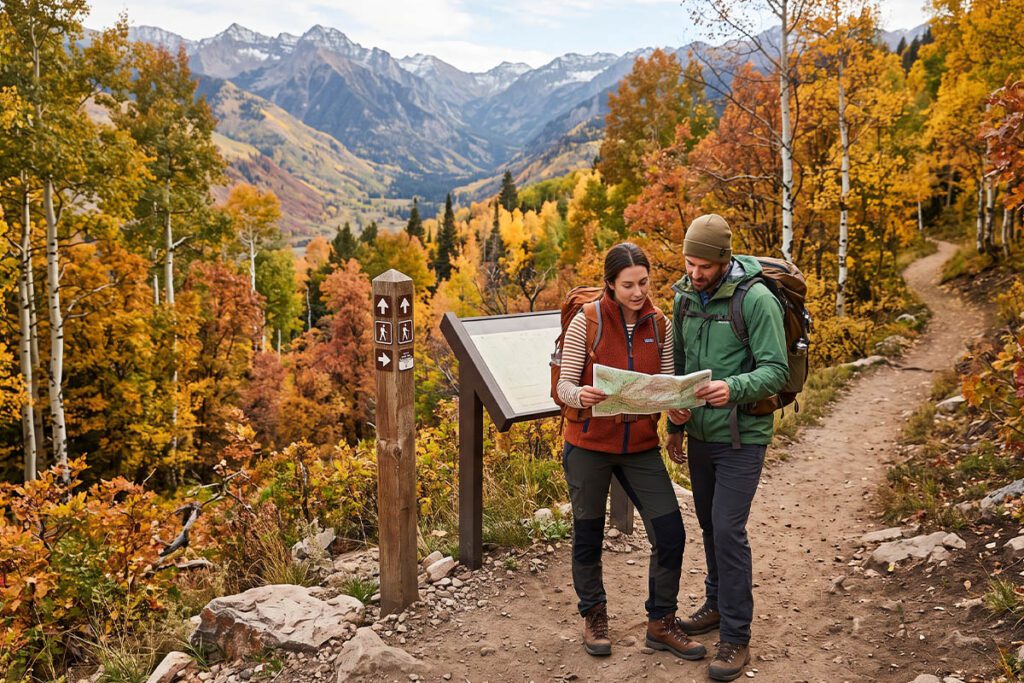
Fall hiking can look effortless in photos. In reality, the season comes with shifting weather, shorter days, changing access rules, and foliage that refuses to follow anyone’s calendar.

A little preparation goes a long way.

Check Foliage Timing Before You Go

Do not plan an entire trip around one predicted “peak” date months in advance.

Fall color depends on elevation, latitude, weather, and local conditions, which means timing can shift from year to year. New Hampshire’s official tourism site, for example, publishes live foliage reports and a seasonal tracker rather than treating historical peak dates as guarantees.

The better strategy is to choose the destination first, then start checking official foliage reports as the trip gets closer.

And remember that perfect peak color is not the only version worth seeing. Early color, mixed green and gold, or a few leaves past peak can still make for a very good hike.

Start Earlier Than You Think You Need To

Fall means less daylight, and longer hikes can take more time than expected once you factor in photo stops, crowds, changing conditions, and the occasional wrong turn.

The National Park Service includes illumination among its Ten Essentials and recommends carrying a headlamp or flashlight even when you do not plan to be out after dark.

For longer routes like Cascade Canyon, an early start also gives you more flexibility if weather changes or the hike simply takes longer than expected.

Sunset is much less charming when you are still several miles from the trailhead.

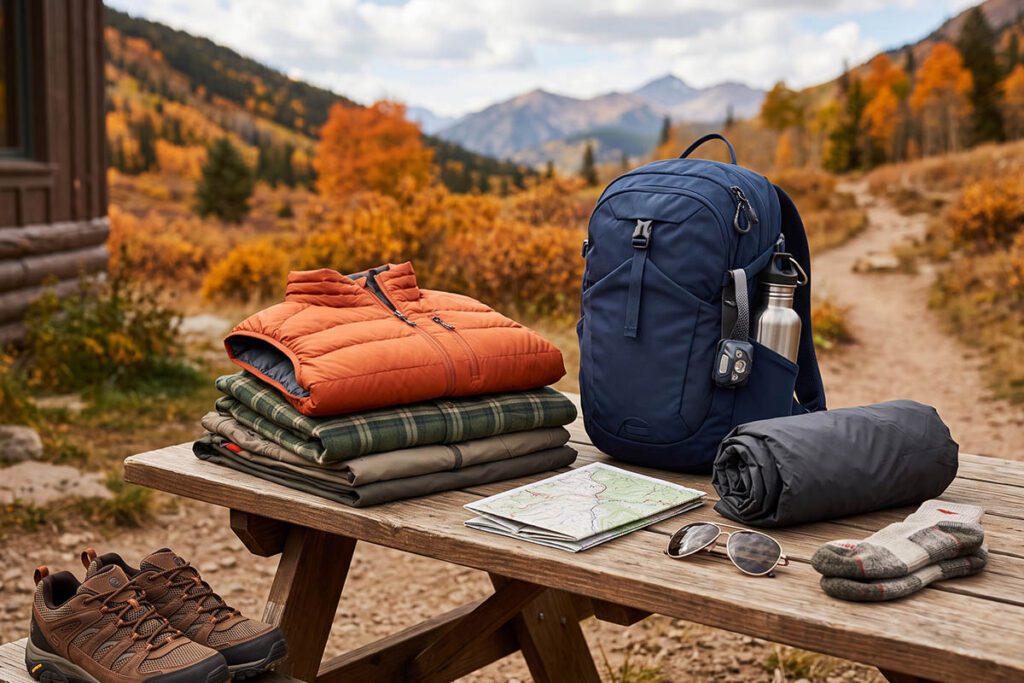
Pack Layers, Even When the Forecast Looks Perfect

Fall weather has commitment issues.

A sunny trailhead can turn into cold wind, rain, or even early snow at higher elevations. NPS recommends carrying insulation and rain protection as part of the Ten Essentials and preparing for sudden weather changes rather than relying solely on the morning forecast.

That does not mean packing for an expedition. For most of the hikes in this article, sensible layers, weather protection, sturdy footwear, water, and the basic hiking essentials will do far more for the day than an overly complicated gear list.

Check Trail, Parking, and Transportation Rules Before You Leave the Hotel

This is the unglamorous part of fall hiking that can save the entire day.

Maroon Bells currently requires reservations for shuttle access or trailhead parking during the operating season. At Grand Teton, the Jenny Lake boat shuttle is operating in 2026 but is scheduled to stop after September 30, and NPS advises visitors to check current road, trail, and wildlife closures before heading out.

Jenny Lake parking is available during the season, but busy periods can still mean waits or full lots.

Mohonk’s Labyrinth is also weather- and trail-condition dependent, so current access should be checked before planning the scramble.

The larger rule is simple: check the official park, forest, trail, or resort source the day before you go.

A beautiful hiking plan becomes considerably less beautiful when the parking lot has other ideas.

Do Not Schedule the Hotel Out of the Trip

There is no prize for squeezing every possible trail, overlook, and scenic drive into one weekend.

These stays are part of the reason the trips work. Leave time for breakfast without rushing, a longer dinner, an activity you did not plan, or simply sitting somewhere with a view and doing very little.

Especially after a bigger hike, deleting something from the itinerary can be the most luxurious decision you make all day.


Frequently Asked Questions About Fall Hiking in the USA

Frequently Asked Questions About Fall Hiking in the USA

What are some of the best fall hikes in the USA?

Some of the best fall hikes in USA include Maroon Bells in Colorado, Jenny Lake and Cascade Canyon in Grand Teton, Mount Willard in New Hampshire, and the Labyrinth at Mohonk in New York. Private trail networks at Blackberry Mountain and Primland are also excellent options for travelers who want hiking built directly into the stay.
When is the best time for fall hiking in the USA?

There is no single ideal week. High-elevation Western destinations can begin changing earlier, while New England typically sees strong color from late September into October and southern Appalachian destinations often peak later. Weather and elevation can shift timing each year, so check official foliage reports close to your trip.

Where can you see the best fall foliage while hiking?

Colorado’s aspen country, New Hampshire’s White Mountains, New York’s Hudson Valley and Shawangunks, the Great Smoky Mountains, and Virginia’s Blue Ridge all offer excellent fall color. Each looks different, which is part of the appeal. Golden Western aspens create a completely different landscape from the mixed hardwood forests of the East.

Is September a good month for fall hiking?

Yes, especially in higher-elevation Western destinations and northern parts of the country. September can bring cooler temperatures and early fall color, but peak foliage may arrive later depending on the region. In New Hampshire’s White Mountains, for example, the transition traditionally begins in late September.
What should you wear for fall hiking?

Layers are the smartest approach. Bring a breathable base layer, an insulating layer, and weather protection appropriate to the forecast. Sturdy footwear is also important, particularly on rocky or uneven routes. For longer hikes, carrying the National Park Service Ten Essentials is a sensible baseline.

Do you need reservations for popular fall hikes?

Sometimes. Reservations may apply to parking, shuttles, timed entry, guided hikes, or resort access rather than the trail itself. Rules can also change seasonally. Maroon Bells currently requires reservations for shuttle access or trailhead parking, which is exactly why checking official access information before your trip matters.

Are these hikes suitable for beginners?

Some are more approachable than others. Mount Willard and the easier Maroon Bells options are better choices for travelers looking for shorter, less technical hikes. Cascade Canyon is longer and more demanding, while Mohonk’s Labyrinth + Lemon Squeeze involves scrambling, tight passages, and uneven rock, so it is better suited to confident, active hikers.

Take the Hike. Keep the Nice Hotel.

A great fall hike earns the view. A great fall trip gives you somewhere equally good to come back to.

That might mean watching aspens turn gold beneath the Maroon Bells, hiking deep into Cascade Canyon, scrambling through the rocks at Mohonk, or simply stepping onto a private trail outside your room in Tennessee or Virginia.

Adventure and comfort do not cancel each other out. In fact, they tend to make each other better.

Pick the trail that suits your pace, check the conditions before you go, and book the room before everyone else gets the same idea.

Similar blogs